Addictions sur ordonnance
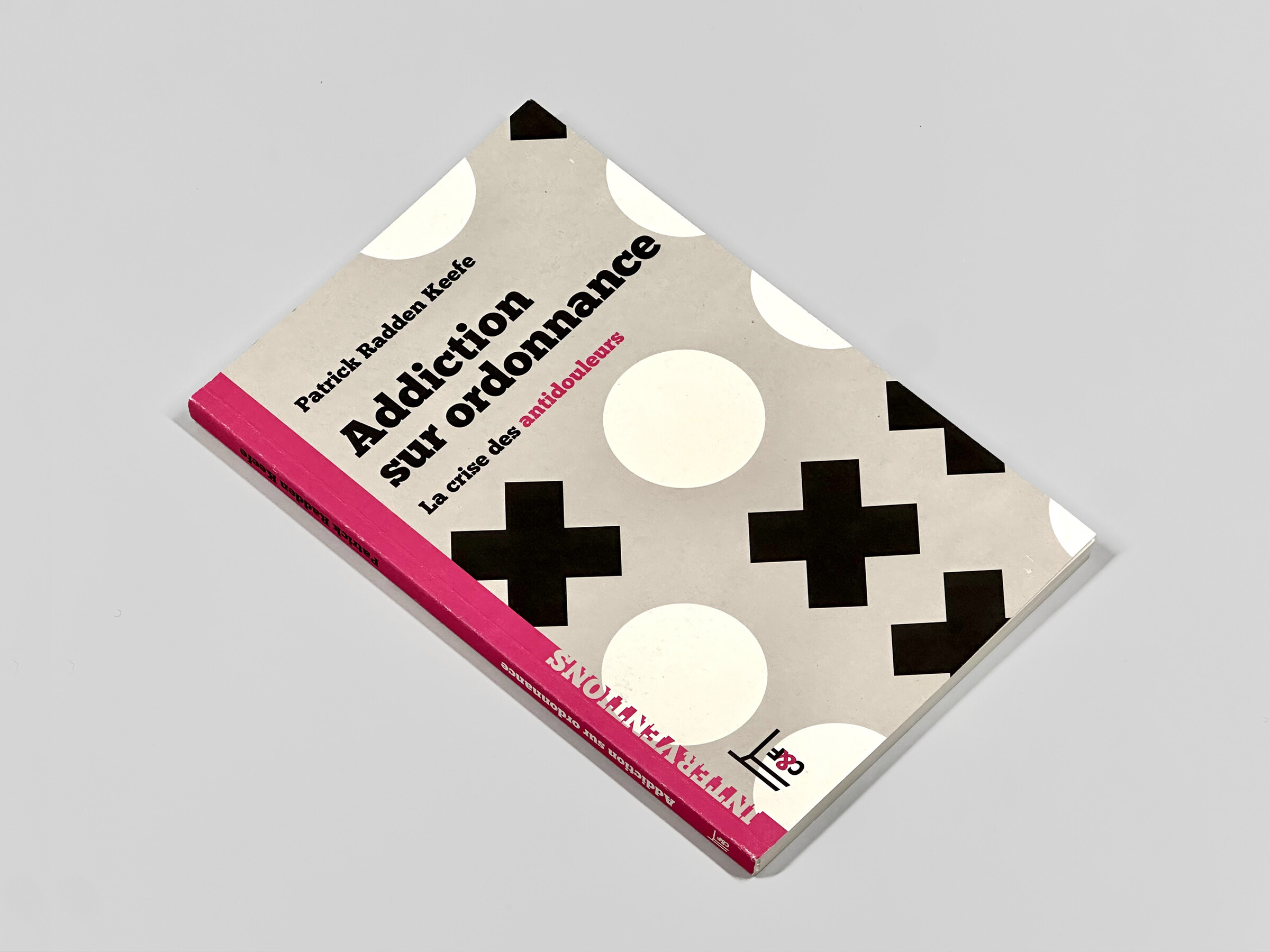
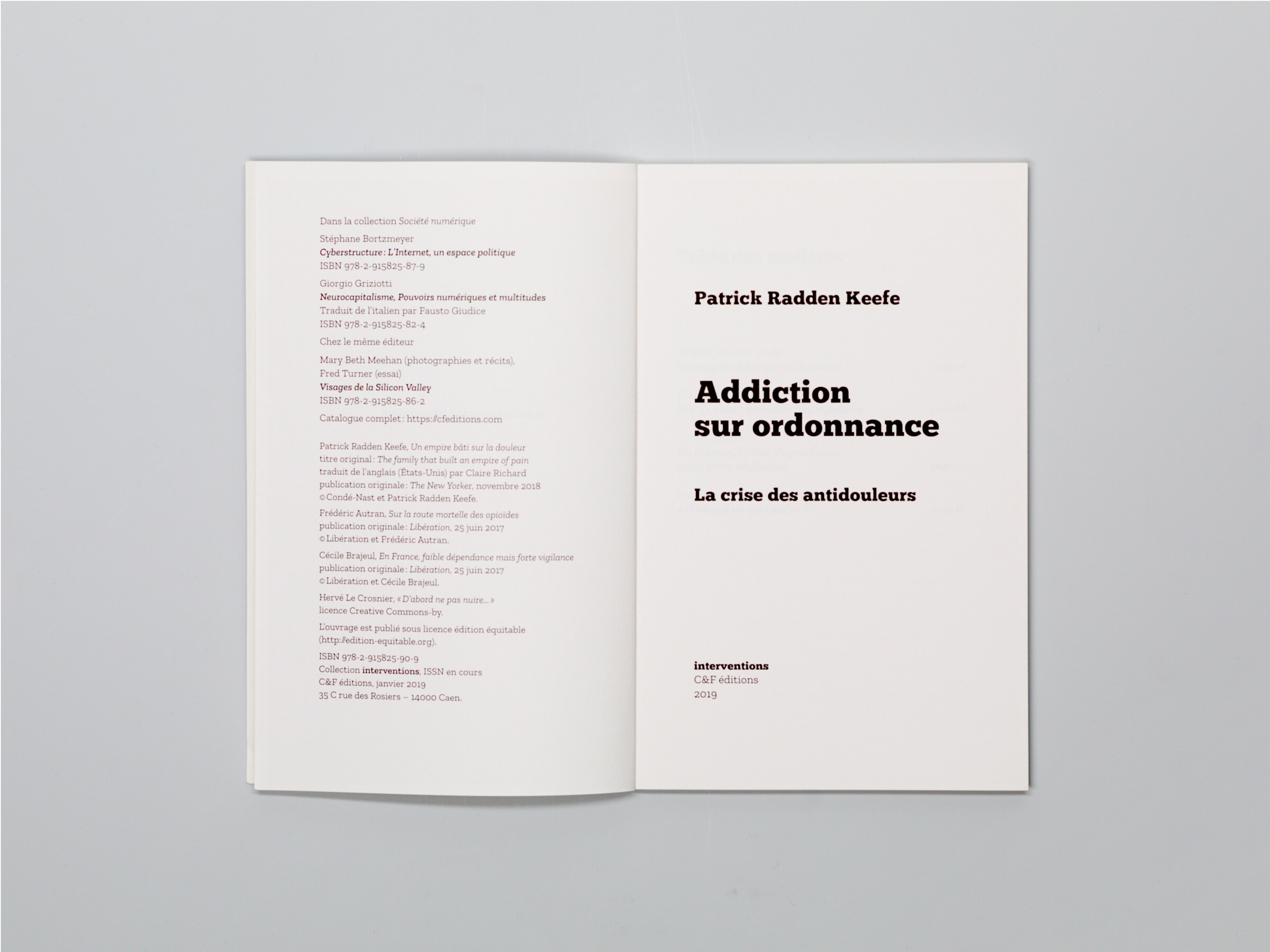
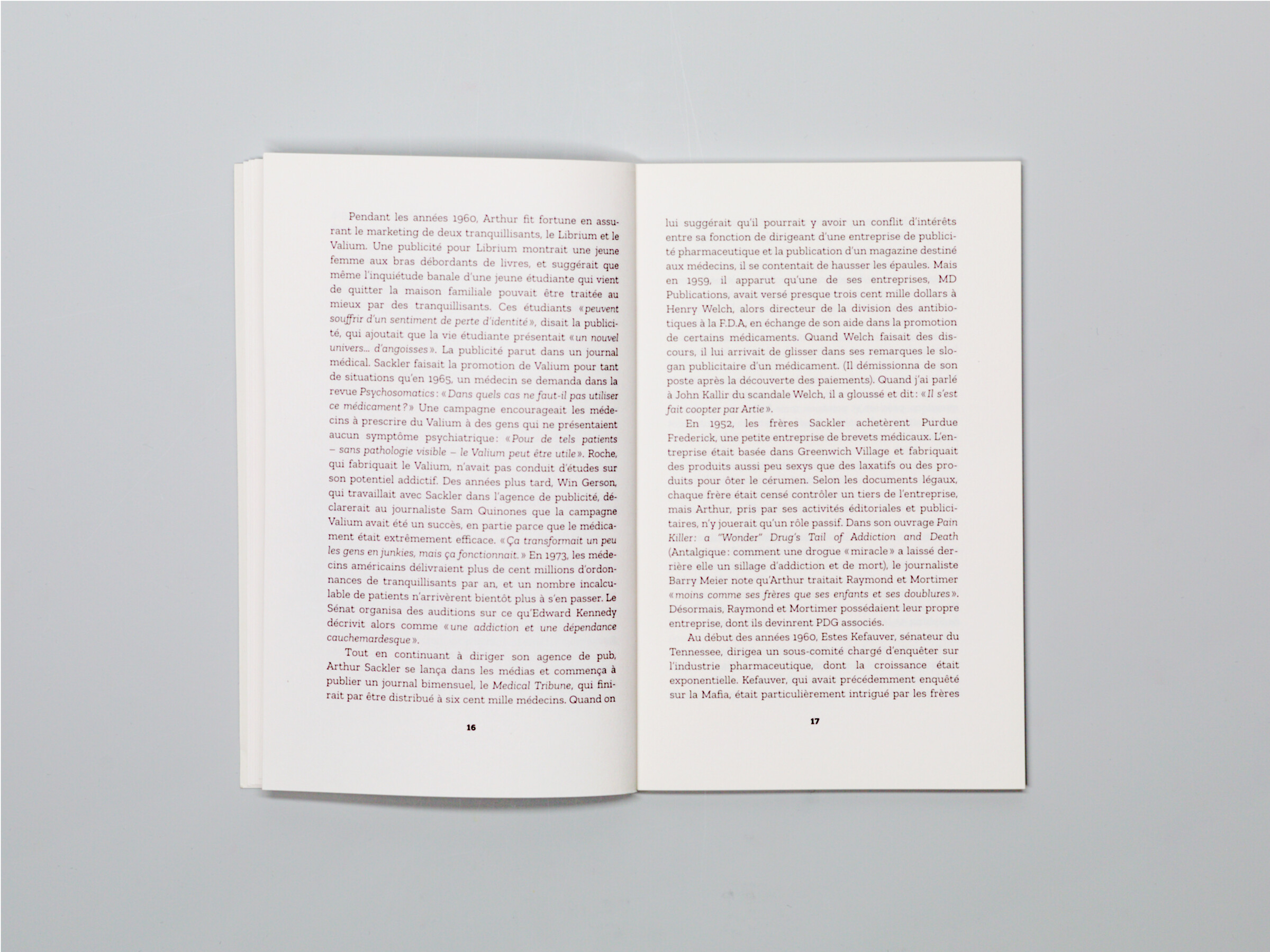
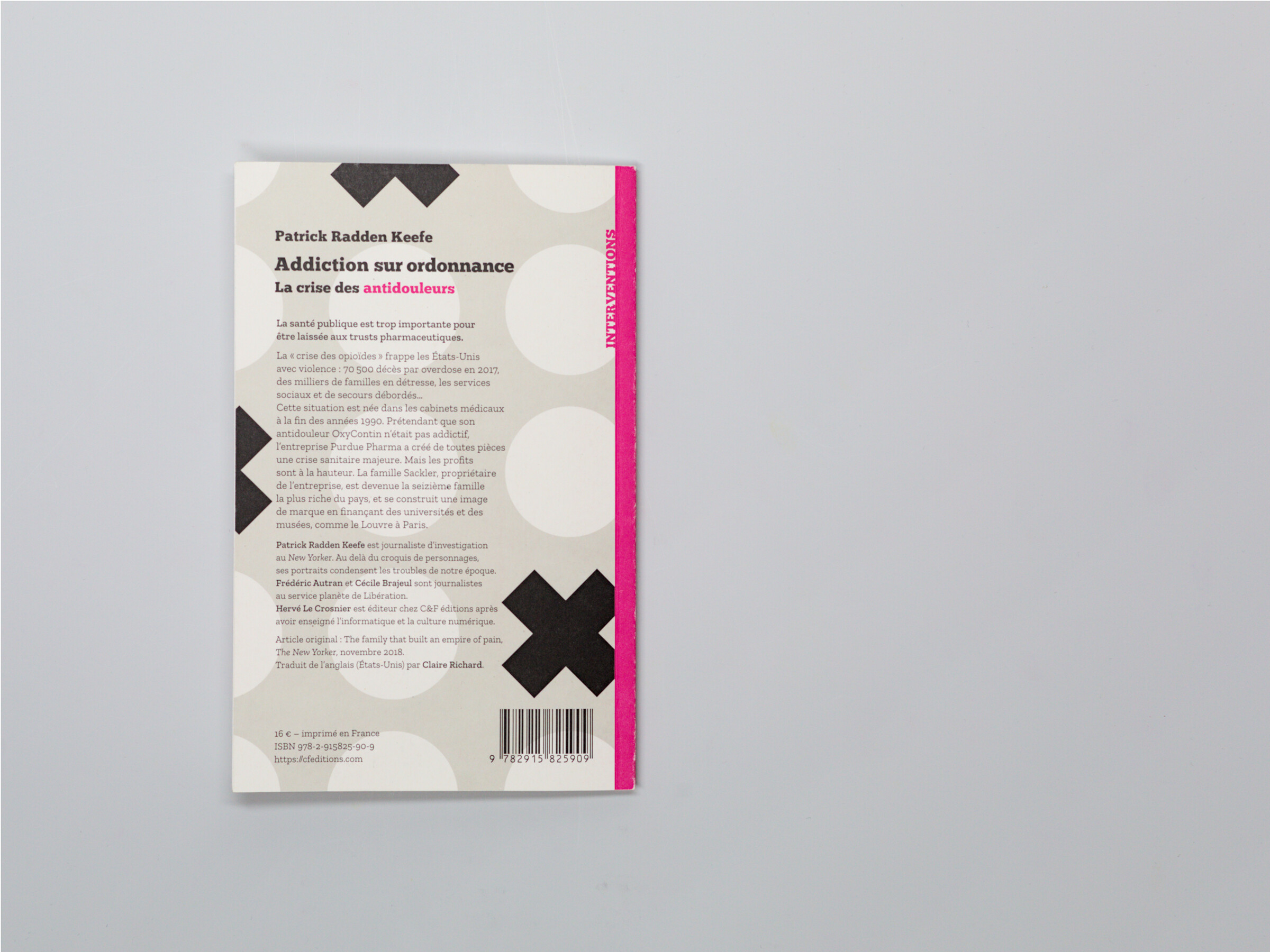
Published in 2019 as part of the “Interventions” series, Addictions sur ordonnance. La crise des opiacés provides a concrete example of how C&F Éditions’ web-to-print publishing toolchain works in practice 1. This book is the French translation, by Hervé Le Crosnier, of Patrick Radden Keefe’s investigation into the Sackler family and the marketing of OxyContin (a short, text-focused essay, which made it an ideal candidate for a first large-scale web-to-print publishing trial).
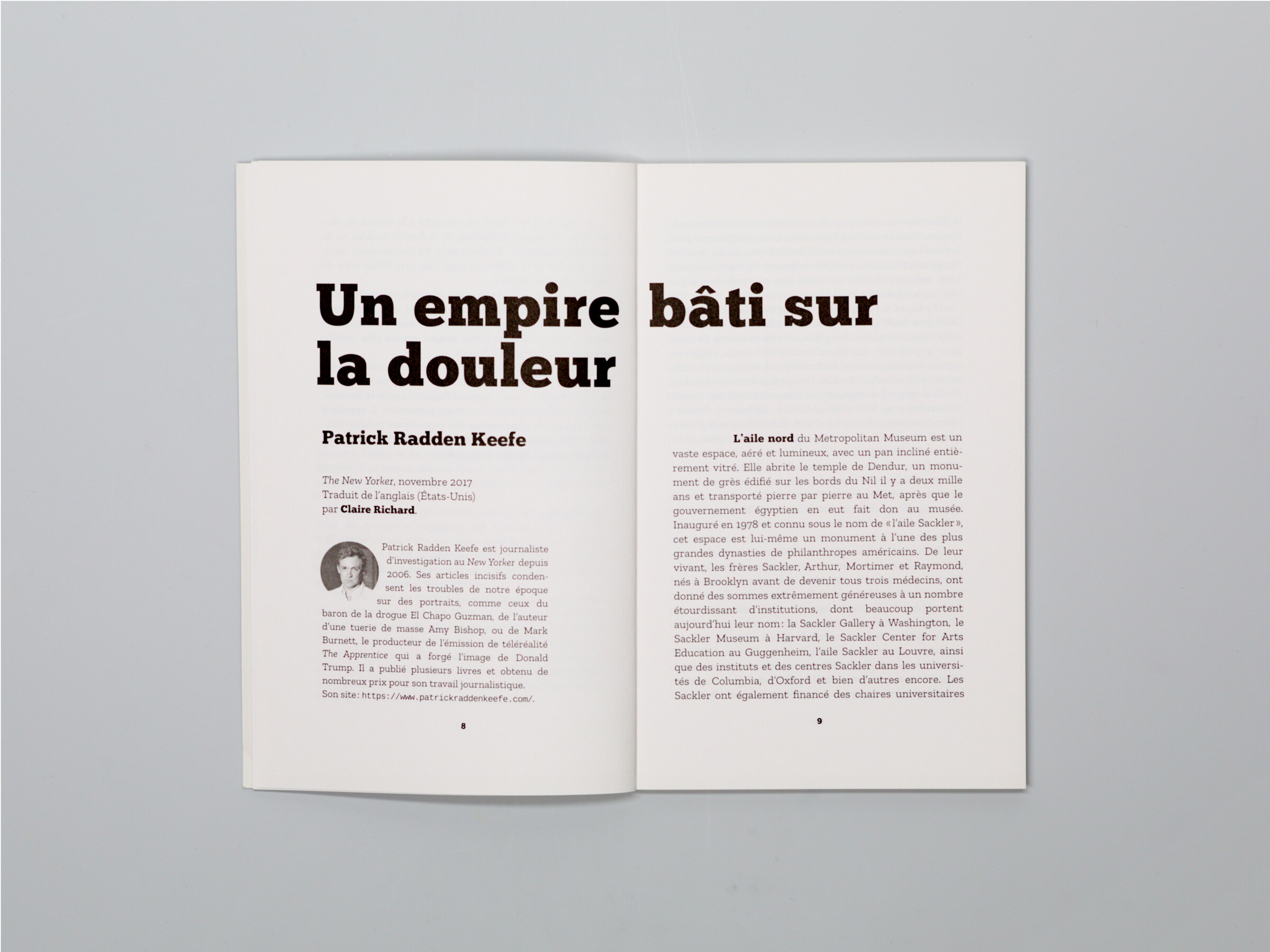
The “making-of” documented by Nicolas Taffin 2 shows a process organized around a strict separation of files, which also involves a separation of roles. The translator worked exclusively in the AsciiDoc manuscript, semantically tagging the text (sections, blockquotes, notes) without any formatting instructions. Each entry generates structured HTML using Asciidoctor. The graphic designer (Nicolas Taffin), meanwhile, worked on two CSS style sheets: a main sheet defining the book’s template (page format, margins, headers, page numbers, basic typography) and a second one (tweaks.css) reserved for local adjustments made on a spread basis once the text was finalized (moving a line back, repositioning a box, adjusting a page break). Since neither party ever touched the other’s files, they were able to work simultaneously, with their folders synchronized via a shared NextCloud server rather than through a version control system (such as Git).
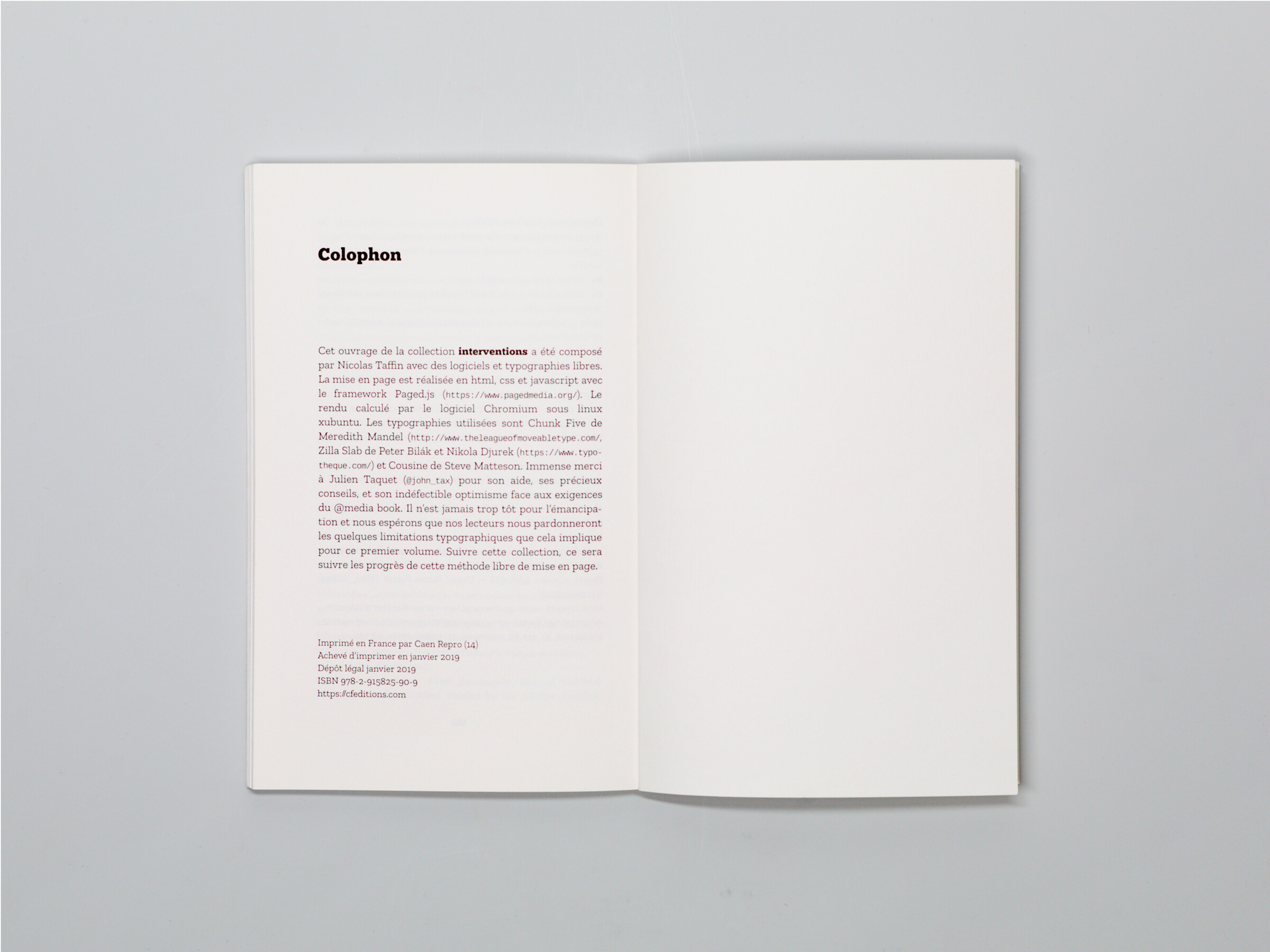
The layout was rendered in real time in the Chromium browser using Paged.js, with Chromium serving both as a preview screen (where corrections were validated directly in the web inspector) and as an output device, since its print function generated the final PDF. Only the final step briefly left the web ecosystem: crop marks and the conversion of the RGB PDF file to a black-and-white, print-ready PDF were handled in Acrobat before the file was sent to the offset printer. This final step was integrated into the production workflow for subsequent titles once Paged.js added the functionality to generate bleed and trim marks. This detail illustrates how each book designed using web-to-print serves as an iteration of the tools: the publication and its production process evolve together.
- Not all C&F Éditions books are produced via web-to-print; only the “Interventions” series and a few other titles are ↩
- See the article on Nicolas Taffin’s blog: https://polylogue.org/addictions-sur-ordonnance-making-of-dune-collection-liberee/ ↩
Infos
Type
Livre
Author(s)
Patrick Radden Keefe
Designer(s)
Nicolas Taffin
Publisher
C&F éditions
Printing
Black and white Offset
Pages
101
Binding
Perfect binding
Size
209 ×135 mm
Technologies
AsciiDoc, HTML, CSS, Paged.js
year
2019
Language
French